Parenting Focus recognises that parenting is a unique journey filled with ups and downs. Therefore, it is so important that parents create routines and habits that allow for moments to rest and recharge. When parents prioritise their own mental and physical wellbeing, it positively influences their parenting style which benefits their children. In this video, Parenting Focus outlines the importance of self care and also offers practical guidance to parents on implementing strategies that will help strengthen and support their own wellbeing.
Praise encourages a growth mindset and fosters a belief in the importance of trying our best. In this video Parenting Focus’ Education and Training manager Kelly Barbour shares the value of specific praise and how to use positive language to encourage positive behaviour.
Parenting Focus recognises that fatherhood is a life-changing, enriching but also challenging experience. This booklet uses words from fathers with the aim of highlighting that parenting is not a linear journey nor does parenting look the same in every family. Through taking opportunities to practice their own self-care and connect with others in a similar position, fathers can learn and grow which will strengthen their relationships with their children. Parenting Focus has many services specifically tailored towards supporting fathers such as weekly online Dads Talk sessions, Fathers & Families programme and the Men’s Minds Matter Commmunity Pharmacy Project. There is also Parenting Focus’ support line which is available on 0808 8010 722.
Parenting Focus, in collaboration with the Open College Network (OCN) NI has developed qualifications aimed at both individuals and practitioners. By addressing key areas such as communication, healthy living, emotional wellbeing and parenting strategies, the OCN equips individuals and professionals with the knowledge and skillset to address the complex needs of today’s families. Below is a brief overview for each module
An overview of the qualifications available:
Level 1- Parenting Skills → Learners will grow in their knowledge of and be provided support in the areas such as budgeting, age-appropriate care for their children, accident prevention and communication.
Level 1- Community Independence → This qualification will focus on decision-making and human rights and responsibilities within society.
Level 1 – Approaches to Wellbeing → This qualification will explore the importance of mindfulness for wellbeing.
Level 2 – Mental Health and Wellbeing → Learners will be taught the differences between mental health and mental illness and will develop strategies to manage their mental health and make appropriate long-term decisions to contribute to improved mental health.
Level 2 → Healthy Living→ This module centres on the importance of fitness, diet and hygiene. It will also help learners to develop their own goals and objectives for self-improvement.
Level 2 → Awareness of Loneliness → This module will help learners understand the causes of isolation and loneliness and the support available. It will also help learners develop a programme plan to address loneliness and isolation.
Level 4 → Working with Parents → For professionals working with families to meet complex needs. Topics include the importance of building and maintaining effective relationships and promoting parent and child play.
Follow this link to hear Lauren Walls, the Education and Training Co-Ordinator at Parenting Focus, explain more about the objectives and logisitics of the OCN Level 4 Certificate in Working with Parents.
https://vimeo.com/1028889862?share=copy
Upcoming Courses
Please contact us at education@parentingfocus.org to find out more information or to register your place in one of the courses.
View the brochure to see a description of each course.
“It’s the time spent together that often leaves the biggest impact”.
Parenting Focus recognises that while Christmas can be a joyful time, it can also be a time of financial worry. The pressure to spend on expensive decorations, decadent presents and luxurious foods, as well as parties and activities can cause additional anxiety. In this video Kelly Barbour, Parenting Focus’ Education and Training Manager, outlines practical tips for budgeting, as well as suggestions for how to alleviate some of the financial pressure without sacrificing the opportunities to make this Christmas memorable.
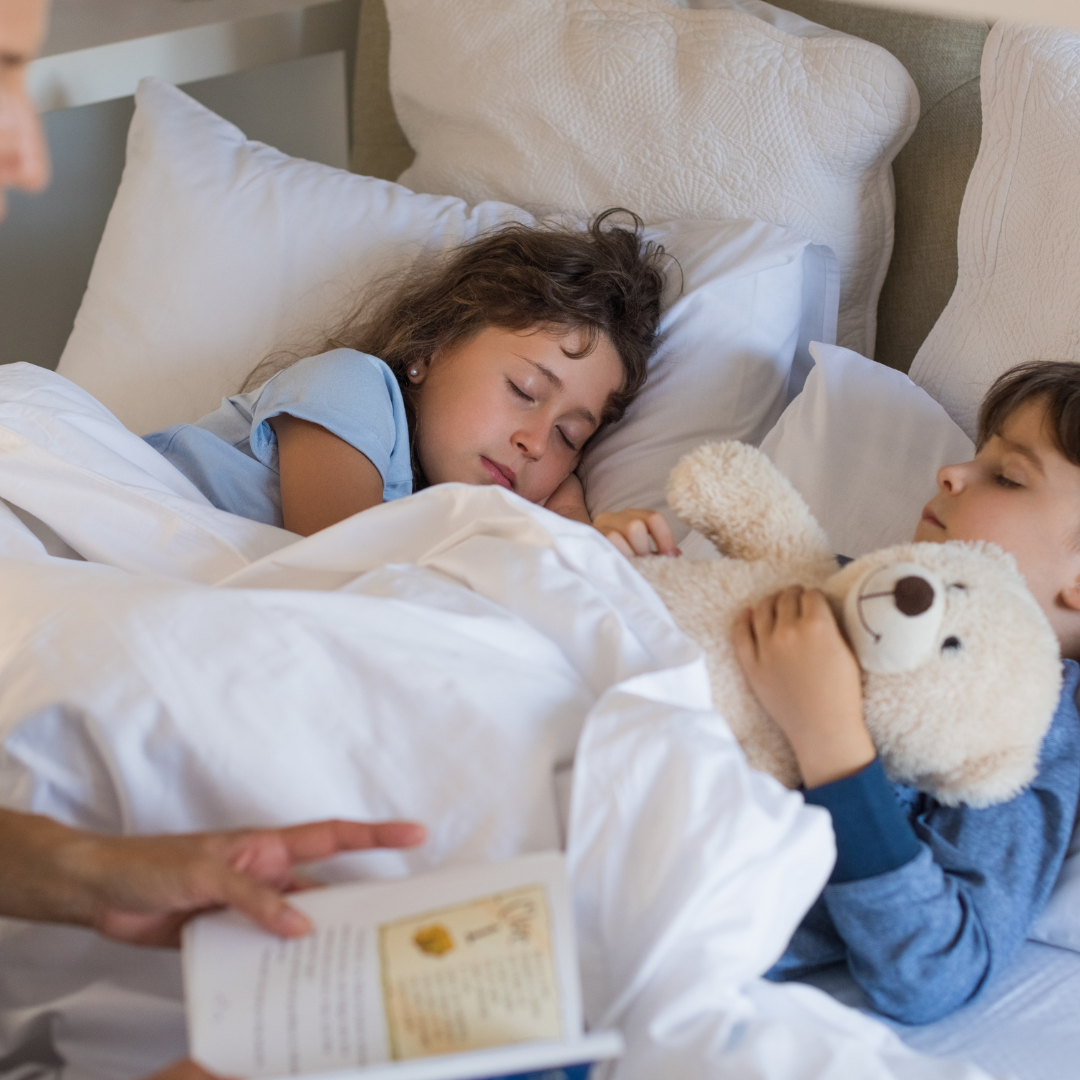
For young children, irregular sleeping hours can be problematic. Setting a regular bedtime schedule can really help children get the right amount of sleep.
It’s important to devise a routine that works for you and your child, and to stick to it, try to always keep regular sleeping hours. The same bedtime ritual each night teaches the brain to become familiar with sleep times and wake times and it programmes the brain and internal body clock to get used to a set routine.
The following tips can help prepare your child for bed:
A warm (not hot) bath will help their body to reach a temperature where it’s most likely to rest.
Reading a book or listening to the radio will relax their mind by distracting it from any worries or anxieties.
Relaxation CDs work by relaxing the listener with carefully chosen words and gentle hypnotic music and sound effects.
Your child’s bedroom should be a relaxed environment. Experts say that bedrooms are strongly associated with sleep, but that certain things weaken the association. These include tablet computers, mobiles/smart phones, TVs and other electronic gadgets, light or noise, and a bad mattress or uncomfortable bed.
“It’s important to create an environment that’s favourable for sleep; the bedroom needs to be dark, quiet and tidy. It should smell fresh and be kept at a temperature of 18-24C.
If you have tried these tips, but your child keeps having problems getting to sleep or sleeping through the night, you may feel you could do with more support. You can speak to your GP or health visitor about these worries. They may refer you to a child psychologist or another expert.
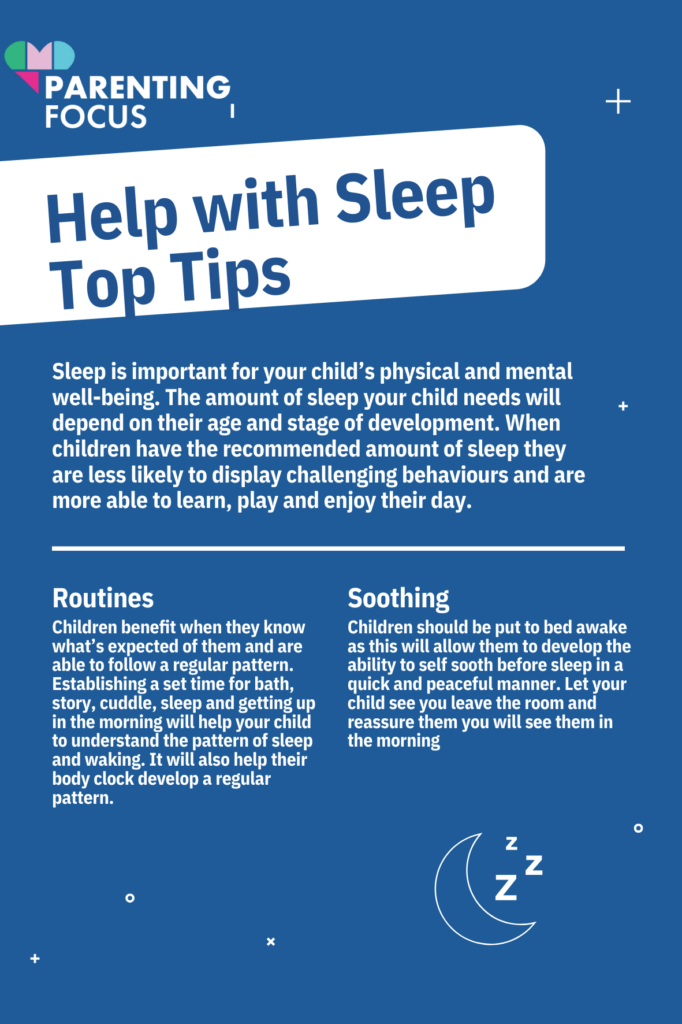
Good sleep is important to your child’s physical and mental well-being. The amount of sleep your child needs will depend on their age and stage of development. When children sleep well they less likely to display challenging behaviours and more able to learn, play and enjoy their day.
Routines-Children benefit when they know what’s expected of them and are able to follow a regular pattern. Establishing a set time for bath, story, cuddle, sleep and waking will help your child to understand the pattern of sleep and waking, and for their body clock to develop a regular pattern.
Prepare– Allow an hour to get your child off to sleep. 15 minutes for the bedtime routine and the remaining time for your child to drift peacefully off to sleep.
Soothing– Children should be put to bed awake as this will allow them to develop the ability to soothe themselves to sleep in a quick and peaceful manner. Let your child see you leave the room and reassure them you will see them in the morning.
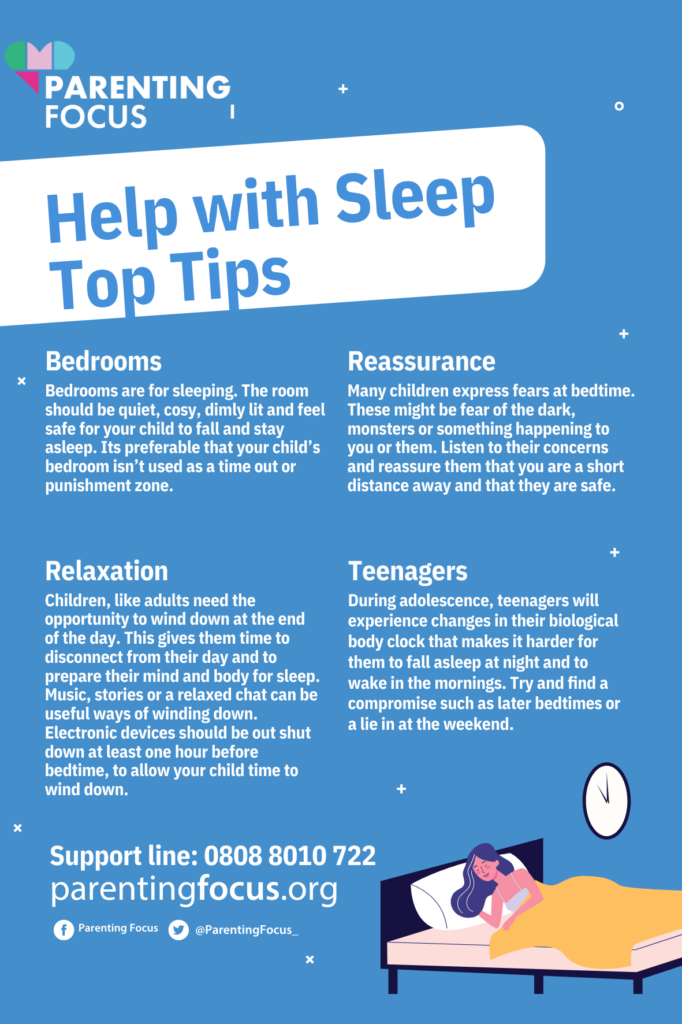
Bedrooms – Bedrooms are for sleeping. The room should be quiet, cosy, dimly lit and feel safe for your child to fall and stay asleep. Your child’s bedroom should never be used as a time out or punishment zone.
Relaxation– Children, like adults need the opportunity to wind down at the end of the day. This gives them time to disconnect from their day and to prepare their mind and body for sleep. Music, stories or a relaxed chat can all be useful ways of winding down. Save rough and tumble play for earlier in the day.
Food– Feeling too full or hungry can make your child uncomfortable or more alert and interfere with their ability to fall asleep. Ensure the evening meal is early enough to allow for digestion and that your child has a healthy breakfast to kick start their day.
Reassurance– Many children express fears at bedtime. These might be fear of the dark, monsters or something happening to you or them. Listen to their concerns and reassure them that you are a short distance away and that they are safe.
Promote Positivity-Set a time earlier in the day when your child can talk though any worries, fears or anxieties that are causing them concern. Regardless of what has happened during the day remind your child of one thing they have done during the day that makes you proud. This will allow you both to finish the day on a positive note and leave your child with happy thoughts.
Reward Chart– Children react well to the concept of reward charts so if sleep is proving difficult get your child involved in creating one. Choose the most important sleep rule, such as staying in bed and in the morning allow them to add a sticker to their chart for attaining the goal.
Limit screen time-This will allow your child to start the process of winding down. Electronic devices should be out down at least one hour before bedtime.
Time – If your child has the ability to read the time place a clock in their bedroom so they can follow instruction on when they go to sleep and when they wake. With younger children use daylight as their guide to when it is time to sleep and when to wake.
Teenagers– During the teenage years’ teenagers will experience changes in their biological body clock that makes it harder for them to fall asleep at night and to wake in the mornings. Try and find a compromise such as later bedtimes or a lie in at the weekend.
When caring for a child that displays school refusal, it can become all-consuming and very overwhelming to manage alongside other responsibilities. It is very important to seek support for yourself and advice on how you can best cope with it.
Be sure to reach out to your child’s school as soon as you can and prioritise creating continual communication with them. Share your concerns with your child’s teachers, as well as sharing insight into your child’s behaviour and anxiety surrounding school. This will allow their teachers to help you in this process and make beneficial changes for them inside the classroom as well as at home.
If your child’s refusal and their emotional reactions to school are intensifying it is crucial to seek support for them from mental health professionals as soon as possible. This will help to lift some of the pressure you may be feeling, as counsellors can also be an advocate for the child with the school and help to push for changes to be made. It also ensures that your child has multiple people that are supporting them, creating a safe support network not only helps them to feel cared for but also allows you to share some of the responsibility.
Whilst it is important to encourage your child to see a mental health professional, reaching out to receive help yourself is also incredibly beneficial. Experiencing and watching the anxiety of your child can be distressing and scary. Having people to share your worries with and offload will help you feel less alone in this situation and aid you in offering level-headed support to your child as well.
Specific resources can help you to support your child in the process of getting back to school. Every school will have an education welfare officer these individuals can be met with, and you can discuss any issues your child is having directly. Additionally, SENAC offer services to help children and parents with specific educational needs locally, every school will have contact details for this service, or they can be found online to seek free and independent advice.
If you are struggling to manage and find that your child staying out of school is impacting on your ability to attend or complete work, be sure to share this with your employer. Having an honest conversation about your concerns and discussing the support they may be able to offer you such as parental leave may begin to make the scenario feel more manageable. Dealing with not only your worries, but also the time required to support your child properly can make it difficult to prioritise your other responsibilities. So, communication with those around you, including employers, can really help you to feel more supported and that your hopes for the situation are achievable.
Children refusing to attend school can be incredibly common. However, when looking at “school refusal” it is important to be mindful of your approach. School refusal often comes from a place of anxiety rather than a desire to play truant. So, it is crucial to not view it simply as a child trying to get time off school, especially when their unwillingness to go to school exceeds just wanting the day off every so often and instead becomes a regular occurrence.
This difference becomes clearer when looking at your child’s reaction when told they must go to school, those experiencing ‘school refusal’ will become extremely upset in this situation and display intense emotions and anxiety.
There are also specific physical symptoms to look out for in your child that will help you to identify school refusal. Complaints of chest pains, experiencing trembling, abdominal pain, nausea, and vomiting could all be physical manifestations of the fear a child may feel towards going to school.
Additionally, children that display the characteristics and behaviour of school refusal can often display symptoms of separation anxiety, social anxiety, and depression which could be an underlying cause for their behaviour. Meaning that children who suffer with any of these issues could be more likely to engage in school refusal.
These symptoms to look out for can have knock-on and long-term impacts on your child’s education and mental wellbeing, so looking out for these will help you to ensure your child can be supported and offered help as soon as possible.
If you suspect that your child is showing the signs of refusal it is important to focus on aiming to not delay their return to school, to minimise the impact.
When looking at the process of helping your child to go into school, their comfort and ability to talk about what they are feeling is crucial. There can be lots of different reasons as to why a child may feel anxious about going to school, such as the workload they have and worrying about making friends. Open and comfortable conversations focusing on why they do not want to go will help you to figure out how best to support them and if there are any changes that you can ask the school to assist you with.
There are many steps you can take with your child to make them feel more confident going into school. Going with your child outside of school hours to simply stand by the gates and see the building, may begin to reduce the daunting feeling they have walking into school in the mornings. Also, creating a stress-free morning routine encourages a happier mood and attitude towards waking up and getting ready to go
to school. This can be achieved by helping them to prepare things the night before such as laying their clothes out, discussing the timetable for the next day, and having breakfast together. Not only does an easy morning routine help, but encouraging your child to wind down with you after school will also help to relieve some of the anxiety they might be feeling. This could be spending time baking or watching a comforting film together on the sofa.
It is crucial to express to your child that you understand what they are going through, and you acknowledge that school is difficult. This will help you to build honest communication around their attitude towards schools and help you in your process to getting your child to enjoy going to school.
SENAC or Special Educational Needs Advice Centre support parents of children with special educational needs. SENAC can explain the special needs system and give practical guidance on the steps to take when trying to get the right help in school for a child.
This website uses cookies to enhance your experience. Some are essential for site functionality, while others help us analyze and improve your usage experience. Please review your options and make your choice.
If you are under 16 years old, please ensure that you have received consent from your parent or guardian for any non-essential cookies.
Your privacy is important to us. You can adjust your cookie settings at any time. For more information about how we use data, please read our privacy policy. You may change your preferences at any time by clicking on the settings button below.
Note that if you choose to disable some types of cookies, it may impact your experience of the site and the services we are able to offer.
Essential cookies and services enable basic functions and are necessary for the proper functioning of the website. These cookies and services do not require user permission according to GDPR.
This category includes all cookies, domains, and services that do not fall into the other specified categories or have not been explicitly categorized.
This website uses cookies to enhance your browsing experience and ensure the site functions properly. By continuing to use this site, you acknowledge and accept our use of cookies.