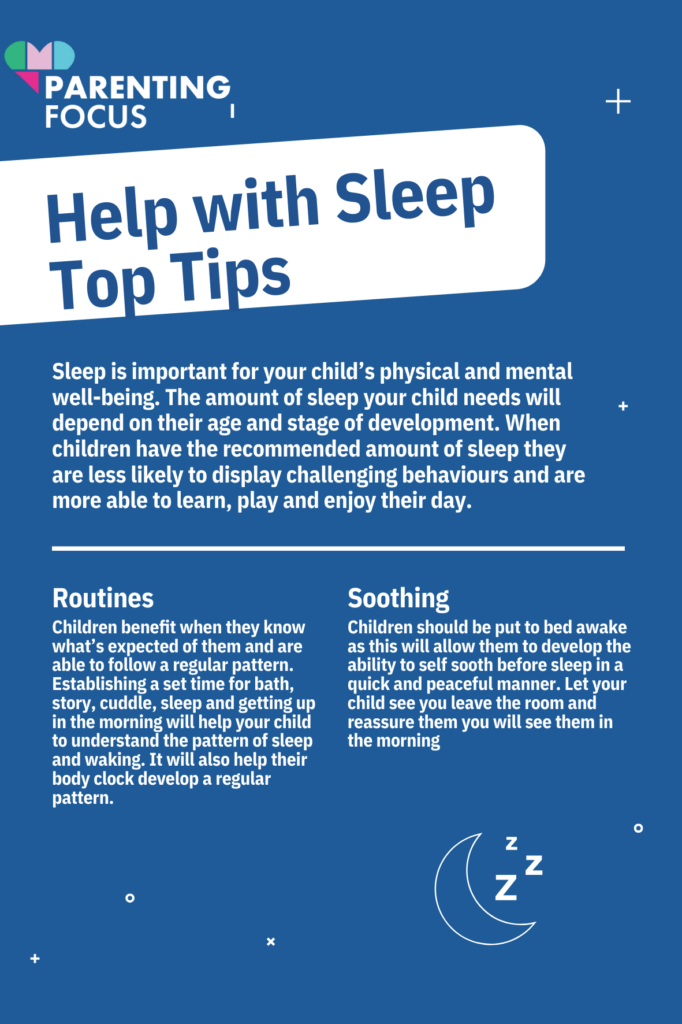
Good sleep is important to your child’s physical and mental well-being. The amount of sleep your child needs will depend on their age and stage of development. When children sleep well they less likely to display challenging behaviours and more able to learn, play and enjoy their day.
Routines-Children benefit when they know what’s expected of them and are able to follow a regular pattern. Establishing a set time for bath, story, cuddle, sleep and waking will help your child to understand the pattern of sleep and waking, and for their body clock to develop a regular pattern.
Prepare– Allow an hour to get your child off to sleep. 15 minutes for the bedtime routine and the remaining time for your child to drift peacefully off to sleep.
Soothing– Children should be put to bed awake as this will allow them to develop the ability to soothe themselves to sleep in a quick and peaceful manner. Let your child see you leave the room and reassure them you will see them in the morning.
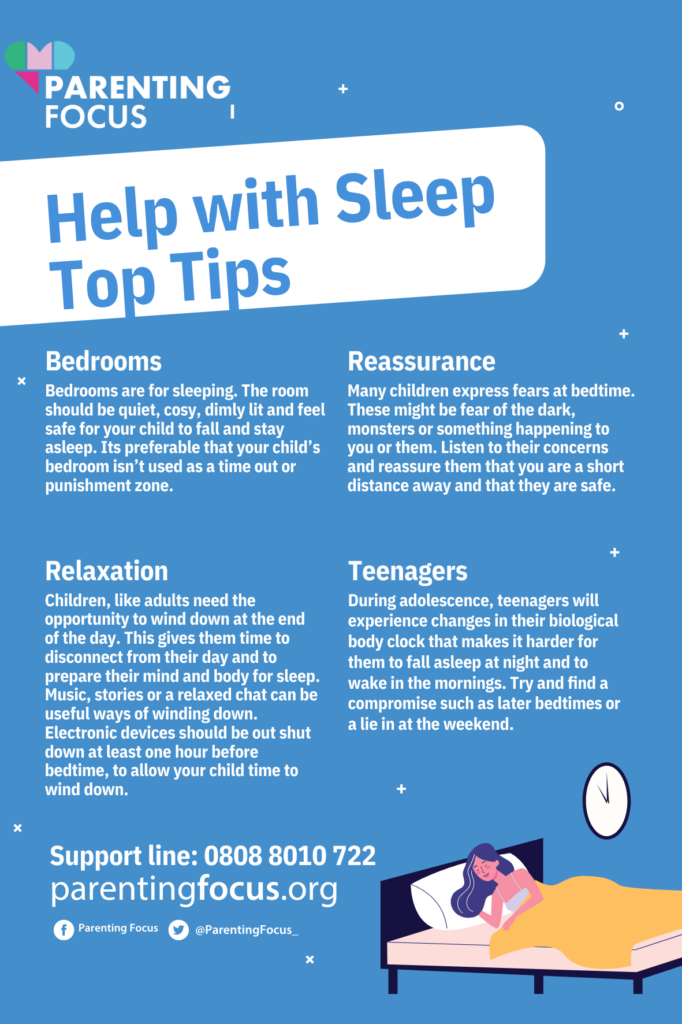
Bedrooms – Bedrooms are for sleeping. The room should be quiet, cosy, dimly lit and feel safe for your child to fall and stay asleep. Your child’s bedroom should never be used as a time out or punishment zone.
Relaxation– Children, like adults need the opportunity to wind down at the end of the day. This gives them time to disconnect from their day and to prepare their mind and body for sleep. Music, stories or a relaxed chat can all be useful ways of winding down. Save rough and tumble play for earlier in the day.

Food– Feeling too full or hungry can make your child uncomfortable or more alert and interfere with their ability to fall asleep. Ensure the evening meal is early enough to allow for digestion and that your child has a healthy breakfast to kick start their day.
Reassurance– Many children express fears at bedtime. These might be fear of the dark, monsters or something happening to you or them. Listen to their concerns and reassure them that you are a short distance away and that they are safe.
Promote Positivity-Set a time earlier in the day when your child can talk though any worries, fears or anxieties that are causing them concern. Regardless of what has happened during the day remind your child of one thing they have done during the day that makes you proud. This will allow you both to finish the day on a positive note and leave your child with happy thoughts.
Reward Chart– Children react well to the concept of reward charts so if sleep is proving difficult get your child involved in creating one. Choose the most important sleep rule, such as staying in bed and in the morning allow them to add a sticker to their chart for attaining the goal.
Limit screen time-This will allow your child to start the process of winding down. Electronic devices should be out down at least one hour before bedtime.
Time – If your child has the ability to read the time place a clock in their bedroom so they can follow instruction on when they go to sleep and when they wake. With younger children use daylight as their guide to when it is time to sleep and when to wake.
Teenagers– During the teenage years’ teenagers will experience changes in their biological body clock that makes it harder for them to fall asleep at night and to wake in the mornings. Try and find a compromise such as later bedtimes or a lie in at the weekend.