

Sorry, but you do not have permission to view this content.
Archives: Resources
Recently added
Sorry, but you do not have permission to view this content.
Sharing Digital Images

Sorry, but you do not have permission to view this content.
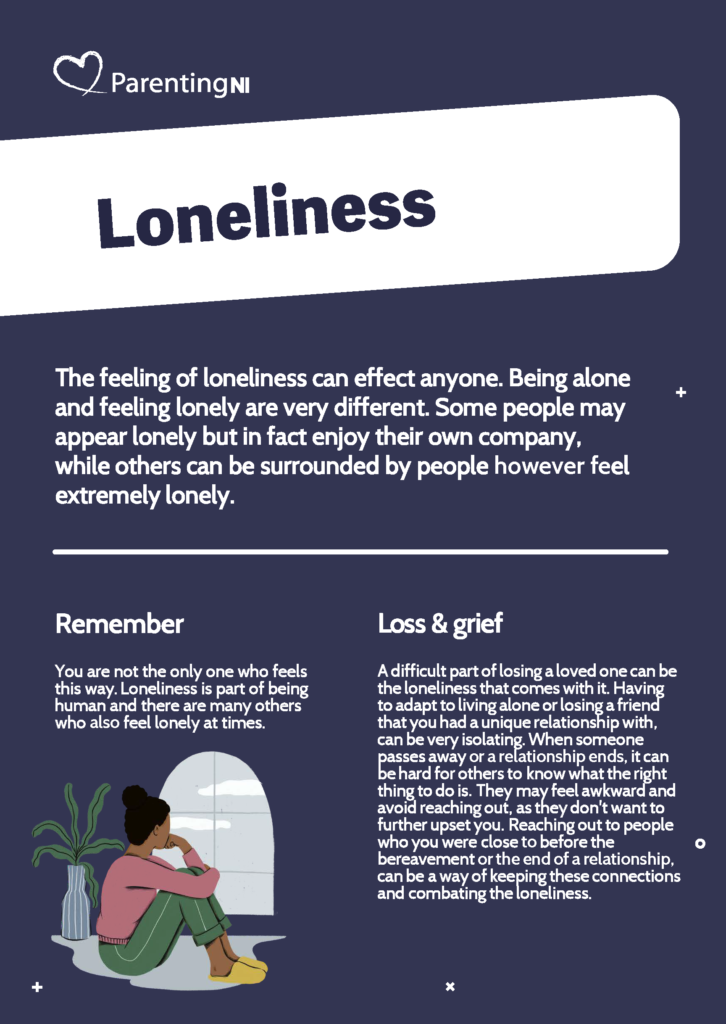
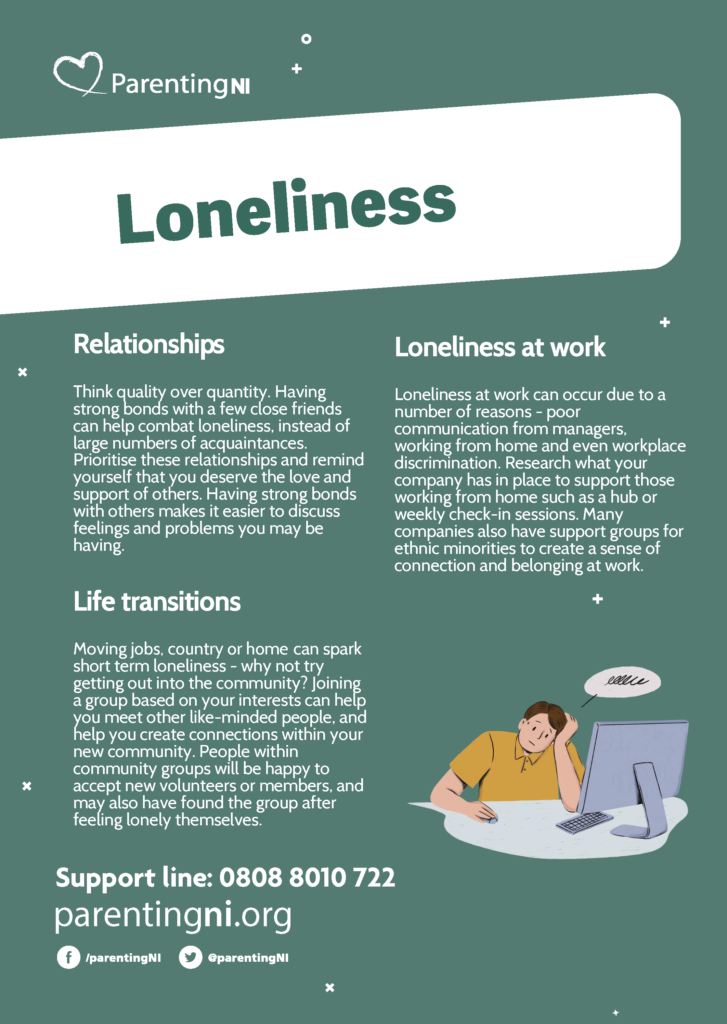
Loneliness

Managing Family Finances

Almost every family, whether they are employed or not, are affected by their finances. It is important that parents are aware of how to best manage their money, budget and know their entitlements.
In pre-pandemic Northern Ireland, 49% of working adults said they were struggling financially and found it difficult to save and keep up with bills[1]. Almost half of families reported that over 20% of their overall income was spent on childcare and for single parent households this was 63%[2]. Furthermore, in 2018/19 NISRA found that 19% of people in Northern Ireland were in relative poverty and a further 16% were in absolute poverty, which had increased by 16% in 2017/18[3].
The pandemic has been a major burden on many families finances, within Northern Ireland NISRA found that in September 2020, 201,500 employers used flexible furlough and more than 33,000 emergency food parcels were provided between April and September 2020 in which 14% of people that received these parcels were in part-time employments[4].
In the UK, the Office for National Statistics (ONS) found that the cost of living was 4.2% higher in October 2021 compared to the previous year, showing the rising cost of living experienced by those living in the UK. Inflation in 2021 has seen a 10% increase in transport, 4.5% in education, 3.8% in utility bills and 1.3% in food and health compared to 2020.
These statistics show the stark financial struggles faced by families in the UK and within Northern Ireland now more than ever before.
Managing Family Finances
- Benefit entitlement: Many parents, both employed or unemployed, single or dual parental households may be entitled to receiving financial support, it is important that you are made aware of the benefits available. The NI Direct (Government services) provides information on benefits in NI. Everyone who has a child is entitled to claim Child Benefit in the UK. There is also support available for additional needs which can be found on their webpage.
Website link: https://www.nidirect.gov.uk/articles/how-claim-benefit
There is a section for childcare benefits and other help for working parents you may find useful, it provides information on:
- Child Tax Credit
- Childcare
- Child care choices
- Flexible working
- Parental leave
- Tax-free childcare
- Working Tax Credit
Link for more information: https://www.nidirect.gov.uk/information-and-services/childcare/childcare-benefits-and-other-help-working-parents
If you are unsure if you are eligible for benefits or wish to receive more information on how to claim benefits you can contact:
Jobs and Benefits Offices
Tax Credits Helpline and Tax Credit Office
Making a financial plan
A financial plan can help families manage expenses such as bills and it will allow you to feel in control of your finances. It will allow you to outline the most essential things you need to spend your money on such as, utility bills, food and rent and set aside money for other things, such as a financial emergency or things you want but are non-essential.
How to create a financial plan:
- https://raisingchildren.net.au/grown-ups/family-life/managing-money/managing-money
- https://www.onefamily.com/talking-finance/finance/how-to-make-a-financial-plan-for-your-family/
- The importance of saving: in order to effectively manage your finances it may be important to set aside some savings in the event of a financial emergency. This will help reduce financial stress and avoid debt. It is important to save as long as you are spending less than you earn (you do not want to put yourself under financial stress if you cannot afford to set aside savings).
Ways to save your money:
- Set up a credit union account: https://www.thebalance.com/how-to-open-a-credit-union-account-315400
- Set up a savings account: Each bank will have their own advice for this, an example of the HSBC savings account https://www.hsbc.co.uk/savings/
- Speak to your bank or a financial advisor for more advice.
- Getting help if you are struggling with your finances: There are many options you can take if you are financially struggling. It is important to talk to someone about your financial stress and to seek help.
- Speak with someone you trust, ask them for advice. Do not suffer in silence, there is always someone willing to listen.
- Contact Citizen advice or visit their webpage: https://www.citizensadvice.org.uk/debt-and-money/budgeting/budgeting/get-help-with-bills/
- Check if you are eligible for a grant: https://www.moneysavingexpert.com/family/grants-low-income/
- Phone Parenting NI support line: 08088010722 where you can talk through the impact managing finances is having on you emotionally, as a parent
The benefits of managing your family finances
By managing your family finances it will improve your families overall wellbeing. Having an organised budget with give you peace of mind that your expenses are covered for that particular period. You will feel in control and less stressed about your finances. Furthermore, it will allow you to stop overspending as you will understand the importance of your money and having money aside in the event of a financial emergency will be a weight of your shoulders. Overall, by reducing the stress caused by finance you will feel much happier which will reflect on your family’s emotional well-being.
[1] Maps, 2018 https://moneyandpensionsservice.org.uk/financial-wellbeing-in-northern-ireland/?cn-reloaded=1
[2] Northern Ireland Childcare Survey, 2019 https://moneyandpensionsservice.org.uk/financial-wellbeing-in-northern-ireland/?cn-reloaded=1
[3] NISRA, 2020 https://moneyandpensionsservice.org.uk/financial-wellbeing-in-northern-ireland/?cn-reloaded=1
[4] https://moneyandpensionsservice.org.uk/financial-wellbeing-in-northern-ireland/?cn-reloaded=1
Spending Time with Children Post COVID-19


There is no doubt the tough COVID-19 public health restrictions have meant that families have had to spend more time together. While these public health restrictions have been tough on many families, some families have found it beneficial and it has led to an improvement in parent-child relationships. However, parents were spending more time with their children than in the past before the COVID-19 pandemic as well.
Time spent with our children has had a strikingly great increase over the years a study from 2016 published in the Economist[1] has found. It has found that both parents spend an increased amount of time with their children between 1965 and 2012. Mothers on average spent 54 minutes per day providing care for their children in 1965, which increased to 104 minutes in 2012. Similarly, men although they spent less time providing care for their children compared to mothers, also spent an increasingly amount of time of 59 minutes on average per day providing care in 2012, compared to just 16 minutes in 1965.
It is evident that in the past the time parents spent with their children has dramatically increased over the years. Because of the Covid-19 pandemic, many parents found themselves spending much more time at home during lockdown; many perhaps were working from home and conducting home schooling with their children, which led to a great increase in the amount of time parents spent with their children.
The University of Southampton has confirmed this recently in their research ‘Understanding Society Covid-19 study’[2]. It shows that the Covid-19 crisis has strengthened parent-child relationships and that nearly 20% of parents who reduced their hours at work to look after their children reported their relationships to be better and only 6% said their relationships became worse. Parents who spent more time home schooling their children also reported having a better relationship with their children than those who spent no extra time with their children. However, the study did find more parents with younger children reported on an improvement in their relationship, compared to parents with older children.
Lone parents appeared to suffer more during the Covid-19 lockdown. Lone parents particularly experienced a severe decline in earnings that may have resulted in stressors, which in turn may have affected their relationships with their children.
The Nuffield Foundation[3] has also found that on average parents spent nine hours of the day providing childcare and three hours completing paid work. This is less than half of pre-lockdown levels. Mothers are 47% more likely to multi-task both childcare and paid work, compared to 30% of fathers. Overall, despite mothers doing more childcare, a father’s time spend on childcare has almost doubled during lockdown.
Since the Covid-19 pandemic many parents have been able to spend more quality time with their children. This experience allowed many parents better communicate, reconnect, support, create new memories and feel more secure in relationships with their children. Moving into a post pandemic world it is still vitally important to continue this connection parents have built with their children, and perhaps for many parents who have experienced enhanced stressors throughout the lockdown, to focus on reconnecting with their children.
Below are some ideas to help ensure you and your children maintain and enhance positive relationships in a post pandemic world:
Connecting with nature
Heading outside, perhaps taking a walk in your local park or beach is a great way to connect with your children, as this gives you the perfect opportunity to spark conversation in a peaceful and calming environment away from our busy lives. When in a relaxing environment children may feel more comfortable to open up about their thoughts, feelings or any concerns they may have. This gives parents a great opportunity to be supportive and reassure children.
Practicing self-care
Taking the time out of you week to practice self-care with your children is a great way to form a connection. Perhaps, take an evening a week to relax and unwind together by watching a movie, eating your favorite treats, running a bubble bath for your child or reading a book together.
Cooking and baking
This maybe a fun way to spend some one on one time with your children away from all other distractions. Setting aside some time to cook your children’s favorite dinner with them or heading to the shops and collecting ingredients for some cakes may be an enjoyable way to spend time together. This time together will allow you to both be creative, have some fun, build your child’s self-esteem and enjoy one another’s company, as well as feel a sense of pride and achievement.
Physical activity
Completing exercise can be a great way to spend time with your children alongside benefiting our physical and mental health. Going swimming, going for a walk or a bike ride are great ways to form a common interest and spend regular time together. It allows you and your children to de-stress together, motivate one another and spend some quality time together. Being physically active can allow you to solely focus on bonding with your children as it eliminates factors outside world such as social media, work and school life.
Overall, there is no ‘prescriptive’ amount of time that a parent needs to spend with their children each day. We understand that parents are juggling many other responsibilities and should therefore not feel guilty if they have not spent a certain amount of time with their child or young person. Rather what we would encourage is to consider the time you do have and what you do , if at all possible ensure that quality time is invested in finding out about your child’s likes and dislikes, who their friends are and what their current interests are. That enables parents to maintain a healthy interest in their child and means that time together can be spent doing things that you both enjoy.
[1] https://www.economist.com/graphic-detail/2017/11/27/parents-now-spend-twice-as-much-time-with-their-children-as-50-years-ago
[2] https://www.understandingsociety.ac.uk/2020/07/05/parents-report-stronger-relationships-with-their-children-during-lockdown
[3] https://www.gov.scot/publications/report-covid-19-children-young-people-families-july-2020-evidence-summary/
Loneliness Strategy for Northern Ireland

About Parenting NI
Parenting NI is the lead voluntary organisation, which focuses on parents. The mission of the organisation is to provide a range of accessible services and support to meet the needs of those in a parenting role. We work with parents to improve outcomes for children and young people and to influence policy and practice on parenting. The work is based on the principle that by empowering and working with parents, outcomes for children are improved.

What is Loneliness?
Loneliness is a normal human emotion. Without the right support, however, it can often transition from a temporary problem into a chronic one. Left unaddressed, loneliness can be very damaging to physical and mental health and lead to long-term difficulties in connecting with others.
Loneliness is a ‘subjective and unwelcome feeling which results from a mismatch in the quality and quantity of social relationships we have and those we desire.’[1]
Loneliness is often linked to social isolation but it is not the same thing. Social isolation is objective, describing the quantity of social connections a person has, whereas loneliness is deeply personal and depends on the quality of relationships. Factors that cause loneliness are often outside a person’s control and challenging to manage without support. This includes; psychological (sense of self, confidence), community (services, social activities, transport), and society (stigma, cultural norms, financial). Often multiple factors cause feelings of loneliness.
Research
Loneliness is a major public health issue. The risk to health is comparable to obesity, physical inactivity and air pollution, and it increases the risk of developing heart disease and depression among other issues.[2] Research has shown that loneliness increases the likelihood of mortality by 26%.[3]
In addition to the impact on people’s health and wellbeing, loneliness is detrimental to wider society, public health and the economy. It is estimated that severe loneliness has an overall monetary cost in the UK of at least £9,530 per person per year.[4]
Loneliness affects people of all ages and backgrounds. However, particular groups are more vulnerable to loneliness and certain life events such as divorce, moving home or the impact of a health condition can trigger loneliness at any stage in life.
For example, NISRA research found that more than one quarter (25.3%) of people living in the most deprived areas reported being lonely ‘at least some of the time’ in comparison to 13.5% in the least deprived areas.[5] Levels of loneliness are also higher among carers, disabled people, people with a learning disability, those suffering bereavement, the LGBTQ+ community and minority ethnic communities.
Becoming a parent is a big change and is a time when people are more vulnerable to loneliness[6]. 87% of parents feel they do not get enough support while 60% have said that social isolation or loneliness has caused them concern.[7]
Our calls
While valuable work is happening across Northern Ireland to support people impacted by loneliness, a step change in efforts is required to tackle this issue on a long-term basis.
Parenting NI, working with partner organisations in the Action Group for Loneliness, are campaigning for urgent development of a bespoke Loneliness Strategy for Northern Ireland.
Northern Ireland remains the only part of the UK that does not have a standalone Loneliness Strategy. A fully resourced, cross-departmental NI Loneliness Strategy led by The Executive Office would align the different work currently being undertaken and enshrine a cross sector framework of initiatives to address loneliness comprehensively.
Parenting NI believes a Loneliness Strategy for Northern Ireland should:
- Support and develop infrastructure to tackle loneliness and increase social connections for parents
2. Promote and support opportunities for peer support for parents
3. Develop specific loneliness measures responsive to single parents, one parent families and parents that have children with additional needs
4. Lead a public awareness campaign on loneliness
5. Allocate sustainable funding to ensure services are provided for the long-term
Support available
Parenting NI encourage parents to use our Information and Support Line/web chat to speak to a Parent Support Officer who will provide a supportive listening ear and help guide parents to the services that may be most appropriate to them depending on their own unique circumstances.
Parenting NI have some resources online that provide advice and signposting for parents including an article about parent emotional health and wellbeing which can be accessed from here.
Further information including top tips and contact details can be found at www.parentingni.org.
[1] Perlman D and Peplau LA (1981) ‘Toward a Social Psychology of Loneliness’, in Gilmour R and Duck S (editors) (1981), Personal relationships. 3, Personal relationships in disorder, London: Academic Press, pp 31 to 56.
[2] Campaign to End Loneliness, Risk to Health, available at https://www.campaigntoendloneliness.org/threat-to-health/.
[3] Holt-Lunstad, J., Smith, T.B., Baker, M., Harris, T. and Stephenson, D., 2015. Loneliness and social isolation as risk factors for mortality: a meta-analytic review. Perspectives on psychological science, 10(2), pp.227-237.
[4] Peytrignet, S et al (2020) ‘Loneliness monetisation report: Analysis for the Department for Digital, Culture, Media and Sport’
[5] Ibid, n.1.
[6] https://www.redcross.org.uk/-/media/documents/about-us/research-publications/health-and-social-care/co-op-trapped-in-a-bubble-report.pdf
[7] Big Parenting Survey 2021
Parents guide to YouTube Kids

Young children are spending increasingly more time online during the course of a normal day. Huge leaps in online entertainment for children & young people has led to higher levels of screen time for children the world over. Learning how to keep your child safe online is vital for parents as we move forward into an increasingly digital world. Take a moment to read our Parents Guide to YouTube Kids & learn all about the safety features available on this site to help keep your child safe online.
What is YouTube?
YouTube is a social media platform specifically created for sharing, viewing & commenting on user created videos. Users share their video content & gain followers to their ‘channel’, which sometimes leads to online content creators called ‘Youtubers’ often amassing huge, digital fan bases. Videos shared on the platform are based on every kind of topic imaginable and are usually free to watch. Users can like and comment on videos on the platform. Due to the loose nature of the content created on the site, there are plenty of safety concerns for parents around this platform, as content does not come with age appropriate tags in the same way traditional films & movies do. The platform has partially addressed these issues with the platform by releasing the ‘YouTube Kids’ site, which is a useful addition for parents to keep their child safe on the site.

How do I set up a YouTube Kids account?
You can create an account through the YouTube Kids homepage. Navigate to the site and go to the top right of the page. Click ‘Sign In’
and you will have an option to create an account. Children under 13 cannot create their own channels or accounts and between the ages of 13 – 17 are only allowed to open them with parental permission.
To sign up, follow these steps:
- Select the lock icon at the bottom of the screen.
- Click Sign in.
- Select the account you’d like to use.
- Tap “Send parental consent email”
- Wait and check your email for the consent letter and activation code.
- Enter the code in the application.
What do I need to keep an eye on?
Minimum Age Range
YouTube does not allow children below the age of 13 to sign up for an account. The site requires users to enter their date of birth before signing up and bars users below this age from creating an account. Therefore, children 12 and under should use YouTube Kids.
Range of content
As previously discussed, there is a huge range of content available for viewers to the site to watch and not all of this is suitable for a young audience. The easiest way to prevent your child viewing harmful content on this app is to use YouTube Kids – https://www.youtube.com/kids/. YouTube Kids has been specially created to help parents monitor their children on the app & has a variety of safety features, which are not available on YouTube.
YouTube Kids Safety Features:
- Automated & human reviewed content filters which aim to eradicate inappropriate content
- Creators & content must be deemed ‘Family Friendly’ before it is shown on this site
- YouTube Kids has a speedy ‘flag’ option, so parents or kids can quickly flag anything that may have made it past the original filters
- Customisable options for parents that allow you to block channels or videos on your child’s account
- Screen time limit
- Limited paid advertisements
- ‘Approve content only’ mode which allows you to have sole control of what your child is watching
- Multiple profiles for households with more than one child with different viewing preferences
- Content ‘levels’ can be chosen based on age groups, making it simple to allow your child to explore age appropriate video content
- Options to keep tags on your child’s viewing history
- You can pay for membership, which will remove ads completely from your child’s account
View or change settings on child’s account
Parental controls and settings
- Select the Lock icon in the bottom corner the page
- Complete the math problem or read and enter the numbers that appear. Or, enter your personal parent passcode.
- Select Settings
Blocking a creator or video
If you or your child has seen something that bothers you, you can block that video or all content made by that creator.
- Tap the more button (three vertical dots icon) beside the video.
- Select ‘block this video’ or ‘block this creator’ and then enter in the code shown on the screen, or your own custom parent passcode.
Flag a video or creator
If you or your child has seen something that bothers you, you can flag that video or all content made by that creator. YouTube Kids will then review this video within 24 hours and take it off the site, if they deem it to be inappropriate.
- Tap the more button (three vertical dots icon) beside the video.
- Select ‘flag this video’ and then select your reason
Set a screen time limit
This handy reminder will lock your child out of the account when they have spent a pre-specified amount of time on the app which you can set & adjust when required.
- Select the lock icon in the bottom corner of any page in the app.
- Read and enter the numbers that appear or enter your parent passcode.
- Select ‘Timer’
- Use the slider or the plus and minus icons to set a time limit
- Select ‘Start Timer’
When the time limit is reached, a “Time’s up!” notification will pop up. The app will then lock, stopping your child from continuing using it. To unlock the screen, select the lock icon again, read and enter the numbers that appear or enter your parent passcode, select Timer and tap End Timer.
Choose content age ranges
This is a useful feature, which allows you to select an age range for your child. The system will then only show content specifically aimed at this age range.
To change age range settings:
- Select the Lock icon in the bottom corner the page
- Complete the math problem or read and enter the numbers that appear. Or, enter your personal parent passcode.
- Select Settings
- Select your child’s profile and enter your parent account password.
- Select Preschool, Younger, Older or Approve content yourself.
Set up ‘Approve content only’ mode
You can set your child’s viewing options to be approved solely by you. You can choose creators or ‘collections’, made by trusted creators. Enabling ‘approve content only’ prevents your child from using the search bar function on this app.
- Select the Lock icon in the bottom corner of the app.
- Complete the maths problem or read and enter the numbers that appear. Or, enter your parent passcode.
- Select Settings
- Select your child’s profile and enter your parent account password to modify settings.
- Select ‘Approved content’ only
- Click through the ‘Getting Started’ pop-up.
- Select ‘Select’.
- Tap the plus icon on any collection, channel or video to add content you’re happy for your child to view
- Exit by selecting the ‘DONE’ button.
- You can change your selections by selecting ‘Manage’ under the ‘Approved Content’ section
View your child’s history
Tap the ‘Recommended button’ which will be a small heart icon, located at the top of your home screen. You will be able to view all of your child’s recent viewing history here.
Digital Safety
Teaching your child to be safe online can start with a conversation. Don’t be afraid of letting your child explore what is out there online. Youtube Kids has many security built-features which will reassure parents who are not as digitally aware. If you aren’t confident online, ask your kids to teach you how to use their favourite apps! Children enjoy teaching their parents a new skill & you will learn why they enjoy using the app so much, which can be useful if they want to delve into new apps or online experiences. Age-appropriate app use that is monitored safely by parents with security features enabled can be a positive way for your children to interact with the digital world, learn new skills & interact with their peer group.
Some points to keep in mind:
- Encourage your young person to talk to you if they see something that they are worried or scared about – open and honest communication is really important when keeping your child safe online.
- Take time out occasionally to monitor what your child is watching on the app. Although the filters on this app are intuitive & regularly reviewed, they may not catch everything that could be potentially harmful or upsetting for your child to view. Remember to flag anything untoward & block the content & creator to assist in keeping the app safe for other viewers.
More information:
https://www.net-aware.org.uk/networks/youtube/
https://www.youtube.com/kids/parent-resources/
https://support.google.com/youtube/answer/2801999?hl=en-GB
https://wellbeing.google/for-families/
https://beinternetawesome.withgoogle.com/en_uk
Helping with Homework

Background
Homework can be a real trigger of stress for children, and inevitably their parents who are trying to support them. Therefore, it is important that parents understand that helping with homework, and their interest and input in their child’s homework is invaluable. Helping with homework is an important responsibility as a parent, and directly supports their child’s learning process. One of the best predictors of success in school is learning at home and parents being involved in their children’s education.
Parental involvement with homework helps develop self-confidence and motivation both inside and outside the classroom. Parents helping children and young people with homework has a multitude of benefits including spending individual time with children, enlightening strengths and weaknesses, making learning more meaningful and having higher aspirations. Parents can be confident in helping their children with homework as they have lots of previous experience that can ensure children can make the most of their learning experience in school.
Research
We know that parents want their children to achieve a good education. According to the Big Parenting Survey, children’s education was the top area that parents felt has caused concern or affected their emotional health and wellbeing over the past six months with 50% choosing this option. This was closely followed by concerns relating to children’s mental health (47%).[1]
The type of help parents can give includes two distinct types of help: quantitative help (e.g., doing homework with the child, providing answers) and qualitative help (e.g., avoiding distractions, providing rules for homework completion, providing support for finding answers).[2] It is key that parents understand that both types of help are useful and better outcomes are achieved when both are combined.
A strong body of evidence suggests that parental involvement in schooling is positively associated with various desired school-related outcomes[3] such as school performance positive mental wellbeing. Furthermore, homework that is well-selected and cognitively challenging is also associated with positive student achievement.[4] Therefore, it is important that parents are able to help their children with homework in a positive and constructive way.
By helping with homework, parents may model effective study habits, cultivate positive attitudes toward learning, and reinforce material covered during the school day.[5] When children are struggling in school, consistent parental help with homework may not only provide direct academic support, but it may also offer children reassurance that they have a caring support system at home.[6]
Whilst parental involvement is important, too much time spent on homework can result in heightened anxiety levels, lack of sleep, headaches, exhaustion and weight loss. It can also condition students to become disenfranchised with education, causing their work ethic inside the classroom to decline.[7] Therefore, it is important that parents are able to strike a balance for their children. This will ensure a better outcome is achieved for your children.

Top tips
Environment
Provide a space that encourages your child to want to complete their homework. Make sure the environment is conducive to learning by turning off distractions, e.g. television / mobile phone. Encourage your child to take regular breaks away from their study and if possible, get outside and benefit from some physical activity. It has also been proven that spending time with family pets help alleviate exam stress as well. Some children prefer to do homework straight after school, whereas others have after school commitments or prefer to ‘unwind’ first.
Nutrition
Before your child starts their homework, try to provide a nutritious snack or meal. During this time chat with your child about what their homework is, ensuring they feel relaxed before they start it.
Communicate with school
If your child is struggling with the pressure of homework and finding it difficult to cope, consider contacting your child’s school. Many schools have support available for children and their parents.
Be supportive
We learn from our mistakes. Rather than simply giving children the answers, it is more beneficial to offer support by guiding them through their work. You can do this by helping to interpret instructions and reviewing completed work. Providing them with the opportunity to figure out the answers for themselves helps to develop their problem-solving skills and gives them the confidence to persevere and become more resilient.
Support available
Parenting NI encourage parents to seek support if they are finding the whole area of homework challenging and relationships are becoming frayed..
Parenting NI have some resources online that provide advice and signposting for parents including an articles and podcasts that can be accessed from here.
Further information including top tips and contact details can be found at www.parentingni.org.
[1] Big Parenting Survey 2021
[2] Gonida, E. N., and Cortina, K. S. (2014). Parental involvement in homework: relations with parent and student achievement-related motivational beliefs and achievement. Br. J. Educ. Psychol. 84, 376–396. doi: 10.1111/bjep.12039
[3] Dettmers S, Yotyodying S and Jonkmann K (2019) Antecedents and Outcomes of Parental Homework Involvement: How Do Family-School Partnerships Affect Parental Homework Involvement and Student Outcomes? Front. Psychol. 10:1048. doi: 10.3389/fpsyg.2019.01048
[4] Dettmers, S., Trautwein, U., Lüdtke, O., Kunter, M., and Baumert, J. (2010). Homework works, if homework quality is high: using multilevel modelling to predict the development of achievement in mathematics. J. Educ. Psychol. 102, 467–482. doi: 10.1037/a0018453
[5] Hoover-Dempsey, Kathleen V., Battiato, Angela C., Walker, Joan MT, Reed, Richard P., DeJong, Jennifer M., Jones, Kathleen P. 2001. “Parental Involvement in Homework.” Educational Psychologist 36(3):195–209.
[6] Drummond, Kathryn V., Stipek, Deborah. 2004. “Low-income Parents’ Beliefs about Their Role in Children’s Academic Learning.” The Elementary School Journal 104(3):197–213.
[7] https://blog.teamsatchel.com/why-should-parents-help-with-homework
Coping with exam stress

Background
There is no doubt that the exam period can be a stressful time for families. Exams are the culmination of many years of work for children and young people. They can determine the path they take in the future including whether they go into further or higher education. Parents have an important role in helping their children and young people cope with exam stress. Parents want their children to do well in exams. Some parents have high expectations for their child and others are worried if they will achieve a particular grade.
Research
We know that one of the biggest concerns that parents have is their child’s mental health[1]. Research has shown that exam stress can have a negative impact on a child’s mental health. It has argued that exam stress was likely to be experienced by 25% of all students but girls reported it more readily[2]. While exam stress is quite common, the effects of it are varied and can be different for different children. Some research suggests that some stress can be positive as it can lead to improving attention and motivation: exams were viewed as a challenge, which improved performance.[3] However, it is more commonly believed that exam stress has a negative effect on children. Ultimately, exam stress can have a negative effect on a child’s wellbeing and affect their ability to achieve to their full potential[4]. Exams have also been shown to a greater stressor than anything else in a child’s life so far.[5]
Parental pressure and expectation can motivate some children but can increase stress if the expectations are unrealistic.[6] Some research has shown that it was possible to identify higher stress and test anxiety in children with higher perceived parental expectations.[7]
Top tips
Below are some ideas to help you manage your child’s exam stress:
Environment
Encourage your child to spend time preparing / revising for their exams. Provide a space that encourages your child to want to complete their revision. Make sure the environment is conducive to learning by turning off distractions, e.g. television / mobile phone. Encourage your child to take regular breaks away from their study and if possible, get outside and benefit from some physical activity. It has also been proven that spending time with family pets help alleviate exam stress as well.
Nutrition
Before your child starts their revision or goes to take an exam, provide a nutritious snack or meal. During this time chat with your child about how their revision is going, ensuring they feel relaxed before they start their revision or go to take an exam.
Nurture Resilience
Children all have different levels of resilience and different ways of responding to and recovering from stressful times. They will also have different ways of showing when the demands that are being put upon them outweigh their capacity to cope. They might become emotional, withdrawn, defiant, angry or resentful and even the most resilient of children have days where it all gets too much, but low resilience will likely drive certain patterns of behaviour more often. The great news is that resilience is something that can be nurtured in all children. Parents play a vital role in promoting and supporting the building of resilience in their children.
Self-Esteem
Children, specifically teenagers, often face uncertainties; they have to cope with competitive environments, challenging situations, meeting difficult expectations, etc. Many struggle with confidence. Help them believe in themselves. Reinforcement and encouragement from parents can go a long way towards strengthening your child’s self-esteem, and instilling feelings such as optimism & relief.
Communicate with school
If your child is struggling with the pressure of exams and finding it difficult to cope, consider contacting your child’s school. Many schools have support available for children and their parents at this time.
If you live in NI and you are concerned about the impact exams are having on your young person contact Parenting NI for support and information on 0808 8010722

[1] Big Parenting Survey 2021 – https://www.parentingni.org/
[2] Bradley, R., McCraty, R., Atkinson, M., Arguelles, L., Rees, R. A., and Tomasino, D. (2007) Reducing test anxiety and improving test performance in America’s schools: Results from the TestEdge national demonstration study. Boulder Creek, CA: HeartMath Research Center.
[3] Putwain, D.W., Connors, L., Woods, K. and Nicholson, L.J. (2012) ‘Stress and anxiety surrounding forthcoming Standard Assessment Tests in English schoolchildren’, Pastoral Care in Education, 30 (4), pp. 289-302.
[4] Denscombe, M. (2000) ‘Social conditions for stress: Young people’s experience of doing GCSEs’, British Educational Research Journal, 26, pp. 259–374
[5] Ibid
[6] Fox, N., Henderson, H., Marshall, P., Nichols, K., and Ghera, M. (2005) ‘Behavioural Inhibition: Linking Biology and behaviour within a developmental framework’, Annual Review Psychology, 56, pp. 235-262.
[7] Peleg, O., Deutch, C. and Dan, O. (2016) ‘Test anxiety among female college students and its relation to perceived parental academic expectations and differentiation of self, Learning and Individual Differences, 49, pp. 428 –436.