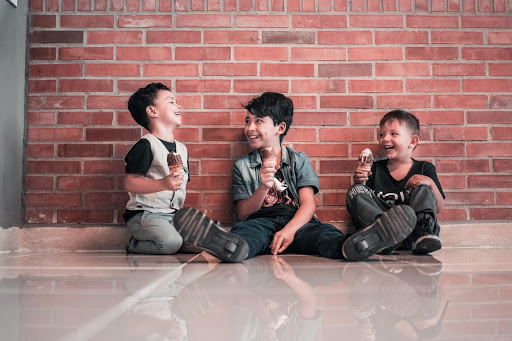
Teens Risk-Taking Behaviour Top Tips

Some risky behaviour is a normal part of growing up. However, there is a line when crossed that leads to behaviour that could potentially expose a young person or others to harm. Even teenagers who are not particularly big risk takers may suddenly take a risk, which is out of character. Close relationships with parents makes risky behaviour less likely.


Understanding Why

Parenting a teenager can sometimes feel scary because teens can be drawn to risky behaviour. Due to their development stage, teens are more driven by emotions, rewards and exciting things. They have higher levels of dopamine in their brains meaning ‘feel good’ and ‘exciting activities’ are more attractive.

Keeping an Eye

Knowing who your teenager is with and where they are can help you protect your teenager. For example, when you negotiate rules with your teen, a rule might be that your teen lets you know where they are going to be and that they phone you if their plans change.

Peer Influence

If your teenager feels peer influence to do risky things, you could help them think of ways to opt out without losing credibility. For example, they could tell their friends that they can’t stay out partying because they have a big game the next day and need to get some sleep.

Agree Rules

Negotiate with your teenager to agree rules and consequences for breaking them. Your teenager is more likely to follow the rules as they have agreed them in advance. You will need to be flexible and adapt the rules as your teen grows and shows they are ready for
more responsibility.

Staying Connected

If you stay connected and build a strong relationship with your teenager through listening and
communication they are more likely to be more confident to manage risky situations. They will also feel more comfortable to come to you when in trouble or for advice.

Wide Social Network

You probably can’t stop your teen from being friends with a particular person or group – but you can give them the chance to make other friends through sport, community or family activities. And if you make your teens friends welcome in your home, it gives you a chance to get to know them.

Sleep

Sleep is important for your child’s physical and mental well-being. The amount of sleep your child needs will depend on their age and stage of development. When children have the recommended amount of sleep they are less likely to display challenging behaviours and are more able to learn, play and enjoy their day.


Routines

Children benefit when they know what’s expected of them and are able to follow a regular pattern. Establishing a set time for bath, story, cuddle, sleep and getting up in the morning will help your child to understand the pattern of sleep and waking. It will also help their body clock develop a regular pattern.

Bedrooms

Bedrooms are for sleeping. The room should be quiet, cosy, dimly lit and feel safe for your child to fall and stay asleep. Its preferable that your child’s bedroom isn’t used as a time out or punishment zone

Relaxation

Children, like adults need the opportunity to wind down at the end of the day. This gives them time to disconnect from their day and to prepare their mind and body for sleep. Music, stories or a relaxed chat can be useful ways of winding down. Electronic devices should be out shut down at least one hour before bedtime, to allow your child time to wind down.

Soothing

Children should be put to bed awake as this will allow them to develop the ability to self sooth before sleep in a quick and peaceful manner. Let your child see you leave the room and reassure them you will see them in the morning

Reassurance

TMany children express fears at bedtime. These might be fear of the dark, monsters or something happening to you or them. Listen to their concerns and reassure them that you are a short distance away and that they are safe.

Teenagers

During adolescence, teenagers will experience changes in their biological body clock that makes it harder for them to fall asleep at night and to wake in the mornings. Try and find a compromise such as later bedtimes or a lie in at the weekend.

Importance of Play

Parenting NI supports parents to understand the value of play by modelling techniques and positive behaviour. Play encourages and provides the opportunity to learn whilst experiencing fun and growing friendships and bonds. 

  • Social Skills – Cooperating during play is the first step in making friends. Play teaches socialization skills such as sharing, taking turns, self-discipline. Playing within a group teaches teamwork, understanding rules and being willing to follow them. Sometimes they also like and need to play alone. 
  • Emotions – Children learn how to handle losing and winning and can act out a range of emotions. They also learn how to manage conflict. 
  • Language – Everyday words, naming emotions – “you seem annoyed someone knocked your bricks down”. Communication and social language like ‘please’ and ‘thank you’. Through play, children learn about the world they live in, for example role play in playing house or shops or mummy and daddy.
  • Creative Play – Creative play involves children exploring and using their bodies and materials to make and do things and to share their feelings, ideas and thoughts. They also learn to use their imagination, like playing schools, doctors and nurses, cartoon characters and super heroes and animals. 
  • Fine and gross motor skills. A motor skill is an action that involves the movement of muscles in your body. Gross motor skills are larger movements involving the arm, leg, or feet muscles or the entire body — things like crawling, running, and jumping. Fine motor skills are those smaller actions like picking things up between the thumb and finger for pre writing skills or using the toes to wriggle into sand or the lips and tongue to taste and feel objects. Children develop their co–ordination, balance, strength and stamina from physical play. 
  • Care of animals and the environment – pets can be invaluable at teaching families, especially children, “emotional intelligence,” a measure of empathy and the ability to understand and connect with others. 
  • Rules – Playing games comes with rules and boundaries. Boundaries work far better if they are made and agreed by everyone. So if children understand the need for rules and see the sense of it, or know you’ve taken their opinions into account, they are more motivated to cooperate. And play well together.
  • What is Play – Play is a way of ‘doing things’ Play helps children to explore the unknown. The pretend element offers a safety net that encourages children to safely take risks. 
  • To have fun – Children often play simply for fun and enjoyment. They bring their own interpretations of situations, events, experiences, and expectations to their play

Stages of Development

Stage 1: Infancy ( 0 -18 months )

Can trust these people?

  • Trust, bonding and attachment 
  • Explain rules, boundaries and consequences 
  • Learning through exploration and being stimulated 
  • Between 10 and 18 months emotions are fully developed 

Stage 2: Toddlers (18 months – 2 years) 

Learning to think

  • Trust, bonding and attachment 
  • Working on ways to have needs met
  • Lack skills to do everything they want – may lead to frustration
  • Not able to handle complex emotions – may lead to tantrums
  • Not able to share 

Stage 3: Pre-School (2 – 4 years) 

Other people

  • ‘No’,’I want’,’gimme’ stage
  • High energy stage
  • Begin to master three skills – language, movement and imagination
  • Act out emotions and needs as unable to express them
  • Will copy everything you do
  • Learns through repetition

Stage 4: Primary School (4 – 11 years) 

I’ll do it my own way! 

  • Building confidence 
  • More responsibility & independence at school & home learn important social skills, playing with others, learning to share, to take turns, how to get along and make friends 
  • Frequently fall in and out of friendships

Stage 5: Adolescence ( 12 – 18 years)

I’ll do it my own way!

  • Establishing independence
  • “Who am I?” Developing identity separate from parents – parents are in the background 
  • Frequently fall in and out of friendships
  • Mistake prone by design 
  • Learn from doing & making mistakes 
  • Child to adult
  • Seeks peer approval 
  • The brain is not fully developed until mid 20’s

Ways to deal with Challenging Behaviour

  • Ignore– Sometimes some behaviour shoudl be ignored. Taking no notice of attention seeking behaviour makes it less rewarding and it often stops
  • Negotiation – Involve your child or young person in discussions about what are adequate boundaries and sanctions. If everyone is involved in these decisions it is more likely that they will be realistic and young people will feel ownership of them and therefore more willing to stick to them. 
  • Distraction – Good for very small children. Distract their attention away from what you don’t want them to do. For example, child poking at electric sockets/cables, distract them with their favourite toy or take them away and show them something more interesting. 
  • Humour – Humour can defuse a situation. This can be used as long as the child does not feel that she/he is the butt of the joke. 
  • Reality – Be realistic in your expectations of your child. Remember the child’s age and ability and always make fair, reasonable and appropriate rules and boundaries accordingly.
  • Be Positive – Try and use positive words and language rather than negative commands all the time. For example, say “stay on the footpath” rather then “don’t go on the road”. Changing how you say things will mean that the child does not always associate you with negative commands and language all the time. 
  • Withdrawing Privileges – Useful for serous misbehaviour. Examples might be; no play station or computer, no TV, loss of pocket money, can’t go somewhere, grounding etc.
  • Say it and mean it – you must follow your sanctions through if you are to be effective, regardless of how you are feeling. When dealing with a small child don’t assume they understand what you want so;
    • Stay calm 
    • Use a different tone of voice so the child knows you are serious
    • Get and give undivided attention when dealing with issue 
    • Get eye contact 
    • Give clear instructions and repeat if necessary
  • Change your tone – Sometimes changing your tone and the volume of your voice can be enough to stop a fraught situation getting worse. For example, if children are playing up in the car, shouting can just raise the volume and make things more stressed and dangerous for the driver. However lowering the tone so the children have to strain to listen can quieten them down immediately. This can work just as well with teenagers, especially when they are expecting you to start shouting. It can really get their attention.
  • Praise and Reward – Don’t ignore good behaviour and attitudes. Remember to let a child know they behaved well, either in a lone situation or towards others. Rewards do not have to be material things, in fact many parents who have used material rewards report that the rewards just got bigger and bigger and young people can grow to expect them. Real praise and encouragement is the best reward as it can be inspirational for child and builds self esteem. Example, say “you were very well behaved at Granny’s today” or “I was pleased to see you being kind to your friend”.
  • Be a Role-Model –You are your child’s role-model. Therefore it is your responsibility to show, by your behaviour and attitude, how you want your child to behave. It should be “Do as I do, not do as I say”. 
  • Allow Consequences – As they get older encourage children to think for themselves and take reasonability for their choice to follow through. Example, if your child refuses to eat their dinner, they will not be allowed dessert.
  • Consistency – Remember to be consistent regardless of where you and child are, or who is present. Children need to know where they stand. It is important that other adults in the child’s life support your wishes and boundaries. Consistency is particularly important for some children with disabilities therefore repetition of instructions may be the only way for a child to remember it.

Raising Boys

Much of the advice and support provided by Parenting NI regarding parenting and childrearing is universal. Both boys and girls benefit from things like clear communication, routine and secure attachment. It is important to recognise that every child is unique. This uniqueness is often the reason why a particular tactic or activity does or does not work with a particular child, rather than it be about their gender. Nonetheless, there are differences in the way in which boys and girls may need support from their parents and as the month of November includes international Men’s day (Thursday the 19th of November), this article will look at some advice specifically for parents and carers raising boys.

When thinking about parenting boys, there are two equally important aspects to consider. One is physical and developmental differences that come from biology. The other is more to do with the idea of what a boy or man ‘should be’ or might face growing up in Northern Ireland. Every society is different, and what is considered normal, appropriate or good behaviour for a boy will in part be a reflection of this. Additionally, every family is different, and so every parent will have their own morals and values for their children. As a result, some of the advice we give might not be relevant to your son or family.

The first question that any parent of a boy looking for advice or guidance on how to raise him may be asked is: ‘what kind of man do you want your son to be?’ Society has a range of expectations for men (and indeed women). It is therefore important for parents to know what particular characteristics they wish to encourage in their sons, as they grow into men. This means looking at behaviours and attitudes that you wish to build in your son that are not generic to all children. An example might be:

“I want my son to have a healthy respect for women, and to understand issues relating to consent”

or

“I want my son to know that he does not have to be violent or aggressive in order to ‘prove’ his manliness”

Of course, most parents will want to ensure all of their children are respectful of others and not violent. However, there are aspects of these behaviours that are often specific to men. Boys will gain their understanding of what is required to “be a man” from a number of sources, but their parents and in particular fathers can have a major role to play. They can counteract any negative stereotypes or influences from society at large.

Scientists have found differences between male and female gender children present from the moment of birth. From as early as three months, male infants on average lag behind females on a range of developmental issues such as language and sensory development. Most of these gaps are closed by age three, but the existence of these differences (and the importance of the first three years of child development) show the value of being aware of gender-related differences in parenting. The distinctions in the way you raise your son will take different forms as they develop. Starting early down the path to a compassionate, respectful man will make the transition easier, but it is never too late.

Differences naturally have an impact on how a child develops. For example, boys tend to outperform girls in spatial awareness in early childhood. This may lead him towards activities that require good spatial skills like ball sports or climbing, and away from social or verbal games like participating in role-play. This might be typical, but as a parent, you are the one who can decide when or if your son is exposed to particular activities or encouraged to indulge his particular interests in them. A ‘nature and nurture’ approach is thus required to understand male versus female development, and account for problems that arise. It is a good idea to introduce your children to a very wide range of activities when they are young and encourage them to see the value in varied play. By not labelling activities as “for boys” or “for girls”, you can promote positive attitudes and grow their own sense of creativity. On the other hand, preventing them from taking part in something they express an interest in because it is not masculine may cause strife or confusion in the household. Additionally, consider what behaviours these attitudes will create as they grow and engage with other children. Your son might mock or refuse to play with another child who he sees as playing the “wrong” sort of game. Once these attitudes have been developed, they will be harder to change or refine later.

One common issue is male children partaking in overly aggressive play. On average, boys are more physically aggressive than girls in play. Normally children will disincentivise overly aggressive play by refusing to engage with a child who is ‘too rough’, and as a result that child will reduce their aggressiveness in order to reengage. Research has suggested that parents, and fathers in particular, can help boys learn to self-regulate by engaging in rough and tumble play in childhood. However, it is important that the parent sets the limits – stopping if they get too rough or start to try to cause real harm. By teaching your son to play within acceptable limits, you can help him to be less violent later. This in turn helps him to learn to solve problems without violence.

Keep in mind that some parents will find it harder to tell if ‘rough play’ is actually fighting. One study found that while boys could tell the difference between a video of rough play and a real fight 85% of the time, fathers or mothers who grew up with brothers about 70%, but women who grew up without brothers identified all videos as actual fighting . As such, keep your own experiences and internal biases in mind when talking about what you see as overly aggressive play.

If your son seems to be too violent in their play, this also presents a chance to talk to him and introduce empathy. While it can be frustrating or concerning – particularly if your son has hurt another child – remember to see this as a learning opportunity. In addition to whatever discipline you feel is right, take the time to speak to him about his actions and why they were wrong. For example:

“How do you think you made [the other child] feel?”

“Do you think everyone was having fun, while you were playing like that?”

“I know you were just playing, but remember that other people have feelings too, and your behaviour can hurt them even if you don’t mean to”

By stimulating this sort of conversation, you encourage your son to think about the wellbeing of others. It also makes it clear that talking about emotions is good, and this may help to prevent issues later in life where a man may feel uncomfortable talking about serious emotional distress. It helps him to see talking and communication are the way to resolving issues, rather than fighting.

Naturally, it is important to talk to your son about women and girls. This should be done in an age-appropriate way, including language they are likely to understand. As modern attitudes shift regarding the relationship between women and men, think about how you want your son to see women in society. You might presume that they will know by default to treat them with respect – not to catcall on the street, harass or otherwise intimidate. For many boys, this will come naturally. However, there is no harm is explicitly stating that such behaviours are not acceptable.

This sort of conversation can happen early in your son’s life. Advice for young boys who are teasing their sisters or female friends (particularly for being girls) can be to follow the “SEE” acronym:

  • Stop: Respond in a calm manner. Tell him that personal insults are not acceptable;
  • Empathy: Like with rough play, encourage your son to see the issue through the eyes of the victim;
  • Educate: Help him to express his frustration or other feelings in a better way. Teach him to use words to describe his problems, but not to insult or harass.

Naturally, children will fight and this will often include insults or taunts that we as adults would deem unacceptable. Remember that your son may not realise that making fun of someone for their gender, or putting them down for being a ‘girl’ is wrong. As his parent, it is your role to teach him. If you see poor behaviour being displayed by others, point this out and talk about why it is inappropriate.

As your son grows the issue of respecting women as autonomous people may present itself. Teenage boys are under immense pressure to ‘show off’ and impress friends. This sometimes results in overly aggressive or inappropriate behaviour with women. Equally, there is a pervasive but incorrect attitude some young men have that a woman needs to be ‘argued down’ and that ‘no’ does not necessarily mean ‘stop’. In addition to being socially unacceptable behaviours, these attitudes can lead to serious consequences if not addressed. As a parent, you can and should talk to your son about what it means to get consent.

In many ways, raising a boy into a man is about forward planning. Parents cannot possibly anticipate every event or influence on their son, and he must take some responsibility as he grows for the kind of man he will be. However, if you have an idea of the types of values you want to instil in him and are watchful for signs of poor behaviour raising a “good man” is perfectly achievable for parents. There are many more issues than can be explored in one short article but keeping open communication and strong standards of behaviour can address many of them.

If you want more help or are worried about the behaviours or attitudes of your son (or any of your children) you can access support on the Parenting NI Supportline on 0808 8010 722.

Dealing with Violent and Aggressive Behaviour

What should parents do?

  • Stay calm
  • Stop and think
  • Remain positive
  • Give yourself time to
    plan your response
  • Be non-judgemental
  • Be gentle and firm
  • Persist
  • Resist violence & believe
    that things can get better

These will increase the
likelihood of success

What should parents not do?

  • Over react
  • Talk too much
  • Argue
  • Lecture
  • Threaten
  • Raise your voice
  • Use sarcasm
  • Say hurtful things
  • Use aggressive body
    language

These may lead to an
escalation of violence

Help with Sleep

Sleep is important for your child’s physical and mental well-being. The amount of sleep your child needs will
depend on their age and stage of development. When children have the recommended amount of sleep they
are less likely to display challenging behaviours and are more able to learn, play and enjoy their day.


Routines

Children benefit when they know
what’s expected of them and are
able to follow a regular pattern.
Establishing a set time for bath,
story, cuddle, sleep and getting
up in the morning will help your
child to understand the pattern
of sleep and waking. It will also
help their body clock develop a
regular pattern.

Bedrooms

Bedrooms are for sleeping. The room
should be quiet, cosy, dimly lit and
feel safe for your child to fall and stay
asleep. Its preferable that your child’s
bedroom isn’t used as a time out or
punishment zone.

Soothing

Children should be put to bed awake
as this will allow them to develop
the ability to self sooth before sleep
in a quick and peaceful manner. Let
your child see you leave the room
and reassure them you will see them
in the morning

Teenagers

During adolescence, teenagers will
experience changes in their biological
body clock that makes it harder for
them to fall asleep at night and to
wake in the mornings. Try and find a
compromise such as later bedtimes or
a lie in at the weekend.

Episode 19 – Parenting in the Pandemic

Parent’s Guide to Video Games

Introduction

Video Games have been a feature of the entertainment landscape since the 1970’s. They have been popular, particularly with children, as a form of relaxation and engagement. They have filtered into the public conscience and lovable figures such as Mario and Sonic the Hedgehog have become cultural touchstones from Belfast to Tokyo.

However, as technology has developed, so too has the impact and influence of video games. Just like books, films and television, video games can and do address and explore a wide range of issues and situations. While few parents see much to worry about when their children race about in Forza, there is rightly more concern when their children are doing battle in Call of Duty or Battlefront. After all, these games talk about (and in some cases, require the player to experience) deeply concerning events such as theft, terrorism and murder. Additionally, there are new and emergent problems such as simulated and real gambling and online gaming with strangers.

Parents often ask us “Do I need to stop my child from playing video games?” or “Are video games bad for children?”. The truth is, there has been a wide range of academic study since the first major concern regarding video game content in the 1990’s led by US Senators Joe Liberman and Herb Kohl. Concerns led to the foundation of ratings agencies like the Pan European Game Information board (PEGI) in the EU, or the ERSB in the US. However, as technology and media moves at breakneck speed parents are often left behind in terms of advice or guidance. 

This puts parents in the unenviable and difficult situation of deciding between protecting their children from potentially harmful content, or restricting or inhibiting their child’s social life and socialisation.

The Facts – Violence

Put simply, there is no absolute consensus regarding the impact of video games on the development and health of children. The American Academy of Child & Adolescent Psychiatry suggests that:

“Studies of children exposed to violent media have shown that they may become numb to violence, imitate the violence, and show more aggressive behavior. Younger children and those with emotional, behavioral or learning problems may be more influenced by violent images.”1

On the other hand, many researchers have disputed the idea that violent imagery in video games has a causal link to violent behaviour in children. Instead, some have suggested that the link between violent content and aggressive behaviour is reliant upon the child’s disposition. Writing for Psychology Today2, author and clinical psychologist Eileen Kennedy-Moore noted:

“People with a personality constellation of being 1) easily upset (high neuroticism), 2) showing little concern for other people’s feelings (low agreeableness), and 3) having a tendency to break rules or act without thinking (low conscientiousness) are particularly susceptible to the negative effects of violent videogames”

Additionally, a 20173 study in the Netherlands found that:

“Exposure to ‘violent’ video games at age 9 was not predictive of aggression or reduced prosocial behaviors one year later. Overall gaming, likewise, was unrelated to most mental health issues including attention problems or reduced social functioning, or total mental health difficulties”

Realistically, Parents who are not gamers themselves have little chance of knowing whether games their children ask for are age appropriate from the titles alone. With names that only make sense in context, such as “Elder Scrolls V: Skyrim” or “Mario & Rabbids: Kingdom Battle”, it is unreasonable to expect parents to know off-hand if the content contained in these titles would be suitable for a 7, 10 or 15 year old child. Additionally, given the unique profile of every child it is even more difficult to decide. Just as with films, what one 12 year old might find exciting or funny, may drive another to anxiety. Truthfully, with regards to violent content only the parent themselves knows their child well enough to make a choice.

Other Issues – Spending

While the majority of concern regarding video games relates to violent imagery, as games have matured the problems that they present have developed as well. Recently, there has been a great deal of concern regarding the use of real money in video games to simulate gambling. The most recent example of this was exhibited in “Star Wars Battlefront II”, while Star Wars has a PEGI rating of 16, the use of Star Wars characters makes it popular and much desired by very young children. While the content of the game is fairly tame (mild fantasy violence), worries have been raised regarding “lootboxes” in game. 

The concept of “lootboxes”, or extra paid content in games is a difficult subject for parents to understand, even when they have some experience of video games themselves. Lootboxes are a form of “Downloadable Content”, or “DLC”. DLC can take the form of major changes or additions to games, or minor cosmetic upgrades, and is released separately from the core game. It must be paid for separately, and is designed to prolong the life cycle of the game.

The issue with DLC like lootboxes is the manner in which it simulates gambling, in particular slot machines. A player pays real-money for a lootbox (in the case of children, this is typically parents money) and receives a number of randomised items. The issue is that the item which the player wishes to get – a character or weapon, for example – is not guaranteed to be in the box. An example is shown below:

The problems with this system can be seen for adults, but the effect of promoting such pseudo-gambling behaviour to children is potentially dangerous. The addition of popular children’s characters such as Luke Skywalker or Yoda to the mix only increases the issue. The game’s publisher, Electronic Arts has vigorously denied that these mechanics are gambling, stating:

“Creating a fair and fun game experience is of critical importance to EA. The crate mechanics of Star Wars Battlefront 2 are not gambling”4

However, this has been contested by a number of jurisdictions. In Belgium, The Netherlands and the US State of Hawaii, formal investigations have opened into whether these mechanics are gambling.

Regardless of the exact legal nature of specific mechanics, the simple existence of the potential to spend vast sums of money (Star Wars Battlefront II, for example, could potential cost a whopping £1,6005 to unlock every aspect of the game) is deeply worrying for parents. Whereas in the 80’s and 90’s, a child might at worst ask for a £60 or £70 game, today’s children potentially could end up spending much larger sums. This concern is particularly acute for children or young people who have their own money (such as teenagers).

Other Issues – Strangers

Much like the internet at large, video games which are played online offer a number of exciting opportunities. Children could benefit from playing with friends, especially when they are far away geographically. Team-building and co-working can help to foster good behaviours and strategies in children. A report by RMIT University in Australia found that children who played online games every day score 15 points above the average in maths and 17 points above the average in science6

Nonetheless, there is danger of so-called “grooming” by adults of children playing online games. This process operates similar to groom on social media platforms. Children are connected to strangers and adults online via video games, and this allows a potential for abuse. In January 2017, Adam Isaac was convicted of a range of criminal activities involving children he met through popular online game “Minecraft”.

The Good News

Despite the concerns regarding video games, it is important for parents to recognise that there are distinct and unique benefits for children of playing video games. These are especially pronounced in games that have an educational aspect to them. Research professor Peter Gray Ph.D wrote that7:

“Repeated experiments have shown that playing fast-paced action video games can quite markedly increase players’ scores on tests of visuospatial ability, including tests that are used as components of standard IQ tests. Other studies suggest that, depending on the type of game, video games can also increase scores on measures of working memory (the ability to hold several items of information in mind at once), critical thinking, and problem solving. In addition, there is growing evidence that kids who previously showed little interest in reading and writing are now acquiring advanced literacy skills through the text-based communication in on-line video games.”

The American Psychological Association published an extensive report in 20138 which identified a litany of potential benefits for children associated with the playing of video games. Video games were linked to improvements in spatial navigation, reasoning, memory and perception in children.

Additionally, video games can help children socially, as up to 70%9 of gamers play with friends in the same room and this co-play activity helps to improve prosocial activities that help with social development. In an increasingly isolated and anti-social environment that children operate in, video gaming often provides an outlet for social play. 

Help is at Hand

RATINGS

Thankfully, parents are not alone in this. In addition to voluntary services (such as the Parenting NI helpline), video games in Europe are rated by PEGI. This rating, which must be listed on the box of a game, or on the store page if the game is listed online, gives an idea of what sort of content is included. The criteria are listed below:

PEGI 3: The content of games given this rating is considered suitable for all age groups. Some violence in a comical context (typically Bugs Bunny or Tom & Jerry cartoon-like forms of violence) is acceptable. The child should not be able to associate the character on the screen with real life characters, they should be totally fantasy. The game should not contain any sounds or pictures that are likely to scare or frighten young children. No bad language should be heard. 

PEGI 7: Any game that would normally be rated at 3 but contains some possibly frightening scenes or sounds may be considered suitable in this category. 

PEGI 12: Videogames that show violence of a slightly more graphic nature towards fantasy character and/or non graphic violence towards human-looking characters or recognisable animals, as well as videogames that show nudity of a slightly more graphic nature would fall in this age category. Any bad language in this category must be mild and fall short of sexual expletives. 

PEGI 16: This rating is applied once the depiction of violence (or sexual activity) reaches a stage that looks the same as would be expected in real life. More extreme bad language, the concept of the use of tobacco and drugs and the depiction of criminal activities can be content of games that are rated 16. 

PEGI 18: The adult classification is applied when the level of violence reaches a stage where it becomes a depiction of gross violence and/or includes elements of specific types of violence. Gross violence is the most difficult to define since it can be very subjective in many cases, but in general terms it can be classed as the depictions of violence that would make the viewer feel a sense of revulsion. 

PEGI also lists a number of reasons for their rating, including drug use, discrimination or violence. Parents are highly encouraged to read and understand the ratings of the games their children are playing. It is also important to realise that PEGI is a legal mechanism, backed up by the government. This means that retailers must make every attempt to prevent children under the suggested age from buying the games – however, it is not illegal for children to play a game they are underage for. 

PARENTAL SETTINGS

In addition to regulation and ratings, many game companies and publishers have installed parental settings and controls built into games consoles or games themselves. This allows a parent to control what is or is not allowed for children. The best example recently is the parental control on the Nintendo Switch. The Switch has a sophisticated array of controls, including:

  • Control of total play times;
  • Deciding which games are allowed, and which are blocked entirely;
  • Which online features are allowed.

This can all be controlled via an app installed on a parents tablet or phone. While Nintendo has been particularly proactive in this regard, most games consoles have at least some level of parental controls.

However, these features are almost never on by default. As such, it is essential that parents seek advice and familiarise themselves with parental controls before giving the console to the child.

TALK

As with almost every parenting issue, the single most effective tool to combat the negatives of video games is good parent to child communication. Particularly with older children, it is important that parents take the time to talk about the games their children are playing. A parent may not be interested in a level or a race, but talking to a child about games and your concerns regarding them is the best way to ensure that children understand the risks and consequences of their activity.

It is important that your child feels that they can come to you if something happens that worries or frightens them. They are less likely to do so if they think that you will not “get it”. By chatting about what they are doing before something happens a parent can build their child’s resilience and ensure that they talk to you when things go wrong.

Conclusions

In conclusion, there is no settled opinion regarding the risks versus benefits of children playing games. There are certainly issues, relating to the appropriateness of content for children, potential spending of money and online activity. However, there are equal and opposite suggestions that playing of video games can be highly beneficial for children.

Like many parenting problems, there is no simple one-size fits all solution to video games. The best and only manner in which parents can take a level of control is by taking a proactive interest in the games that their children play. While the world of video games can be particularly opaque and difficult for parents to access, particularly if they are not tech-savvy themselves, taking a level of interest is the best way to protect children.

1: AACAP (2015) “Video Games and Children: Playing with Violence” LINK

2: Psychology Today (2015) “The Truth About Violent Video Games and Kids, Part 1” LINK

3: Journal of Youth and Adolescence (2017), Lobel et. Al. “Video Gaming and Children’s Psychosocial Wellbeing: A Longitudinal Study”

4: PC Gamer (2017) “Electronic Arts says loot boxes aren’t gambling” LINK

5: Metro (2017) “Star Wars: Battlefront II costs £1,600 to unlock everything” LINK

6: International Journal of Communication (2016) Posso, A. “Internet Usage and Educational Outcomes Among 15 – Year – Old Australian Students”

7: Psychology Today (2012) “The Many Benefits, for Kids, of Playing Video Games” LINK

8: American Psychological Association (2013) “The Benefits of Playing Video Games” LINK

9:Pew Research Center (2008) Lenhart, A. Et al. “Teens, Video Games and Civics” LINK

This website uses cookies to enhance your browsing experience and ensure the site functions properly. By continuing to use this site, you acknowledge and accept our use of cookies.

Accept All Accept Required Only